


Effective decision making across defense missions depends on fast, reliable access to integrated data from diverse systems and sources. Today, tracking and managing friendly and allied assets relies on manual processes and disparate systems, leading to potential delays, inaccuracies, and reduced system interoperability.
Keystone is a Blue Force Assurance product that leverages AI agents to ingest reports about friendly units from across echelons and allies, resolve inconsistencies and duplicates, and generate distinct unit entities with assigned confidence levels. Keystone updates these entities in real time, creating a single, trusted object-based data layer for mission command systems.
The core feature of Keystone is contextual entity resolution.
Entity Resolution is the science of identifying unique objects within a data stream. Whether distinguishing specific vessels and units or synthesizing fragmented reports into defined “units” and “groups,” entity resolution adds more confidence to the common operating picture (COP).
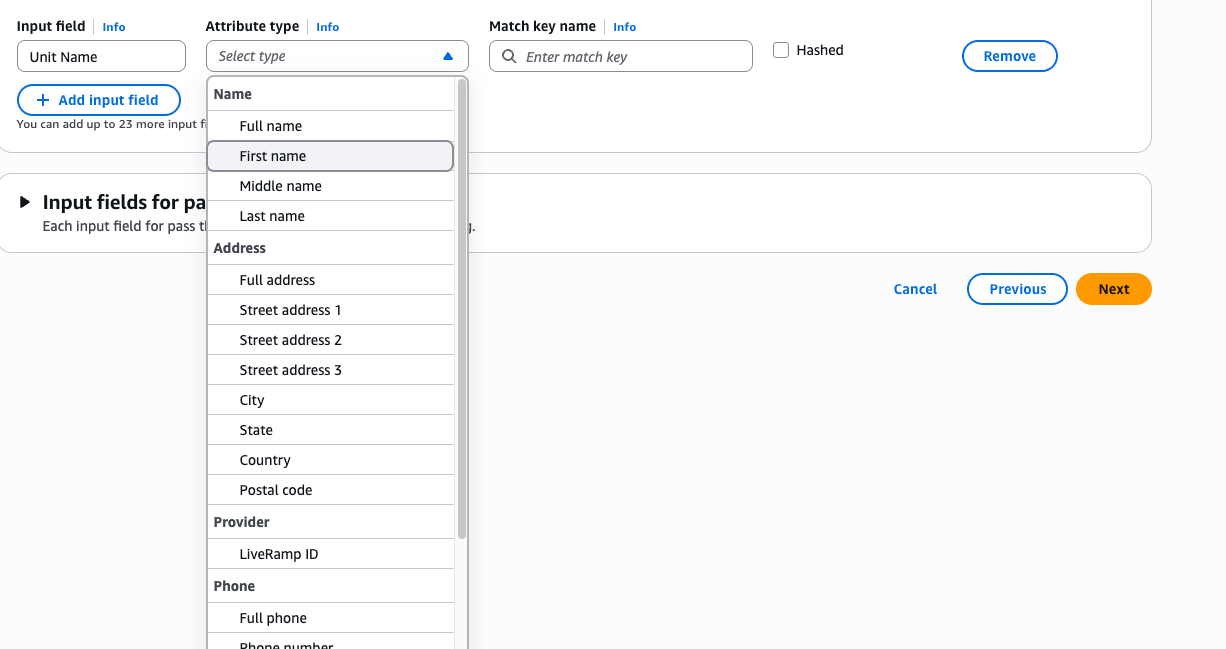
Legacy entity resolution is often a bottleneck, requiring rigid schemas and hyper-specific matching rules. In systems like AWS Entity Resolution, your data must already live in a Glue catalog and fit neatly into predefined attribute buckets. This forces a "perfect data" workflow: your keys must be clean, your types must match, and your schemas must be pre-mapped. If you want to match address to home_address, you have to manually bridge that gap and hope the formats align. Legacy systems are built for scenarios where you have the time and personnel to manually tune every schema. Keystone is built for the reality of warfighting data—messy, unstructured, and constantly shifting.
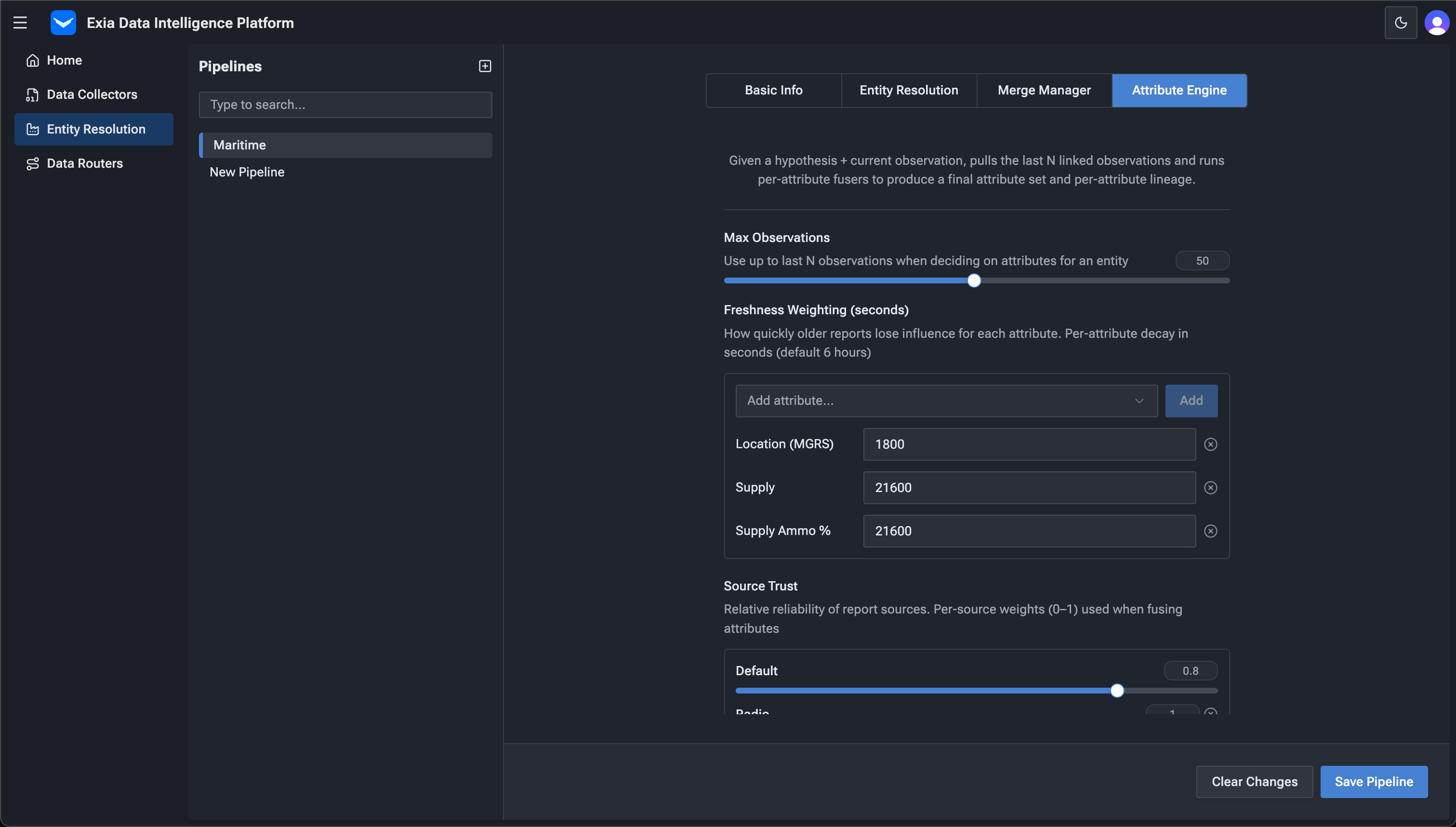
Keystone breaks the “perfect data” requirement by introducing AI-driven context where it matters most. We’ve reduced the complexity of entity resolution to three inputs: raw files, natural-language instructions, and your target definitions. Because Keystone understands the intent behind the data, it removes the need for manual structuring or hyper-specific matching rules. By shifting the burden of “understanding” from the operator to the AI, we eliminate the need for pre-processing and manual schema alignment.
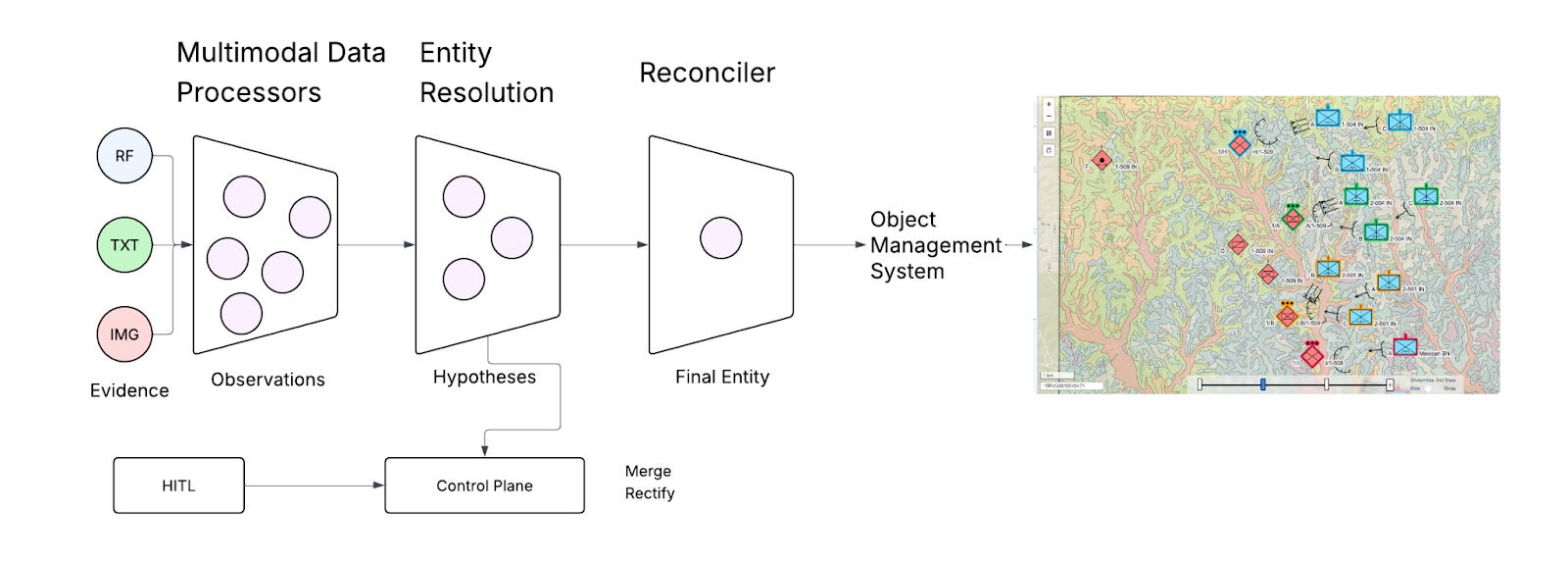
Keystone represents a fundamental shift in how we handle object-based data layers for mission command systems. By replacing manual, schema-heavy processes with AI-driven contextual awareness, we ensure that commanders spend less time questioning their data and more time acting on it. Having successfully validated Keystone’s performance at two four-star commands, Exia Labs is ready to bring this “single source of truth” to your mission command systems.

Ready to see Keystone in action? Reach out to schedule a demo at contact@exialabs.com.